- Date
- 04 SEPTEMBER 2026
- Author
- DANIEL FACE
- Image by
- PRESS OFFICE
- Categories
- News
Mona Stehle on Berlin Art Week 2026, AI and The Future of Experimental Art
Berlin Art Week returns from 9–13 September 2026 for its fifteenth edition, transforming the city into a sprawling stage for contemporary art, performance, sound, theatre, technology and debate. Bringing together around 120 museums, galleries, project spaces, private collections and Positions Berlin Art Fair, the festival foregrounds connections between established institutions and Berlin’s independent scene. This year’s programme looks from Berlin towards Eastern Europe and beyond, while examining migration, shared histories, ecological and geopolitical urgency, and the changing conditions of art in an age of artificial intelligence. At its centre, Berlin Art Week Garten at Kulturforum brings together talks, workshops, performances, DJ sets and open-air cinema across the Gemäldegalerie and Neue Nationalgalerie. For RED-EYE, we spoke with Artistic Director Mona Stehle about Berlin’s experimental spirit, the importance of crossing disciplines, AI’s impact on image-making, and why protecting the material conditions for artists remains essential to the city’s future and creative communities.

Berlin has always been a city where artists can experiment, reinvent themselves and create outside established structures. What does Berlin mean to artists today, and how do you see that identity evolving?
Experimentation thrives on curiosity, openness and a willingness to take risks, and Berlin, for all its changes, has never been short of any of that. We see artists responding to urban transformations in innovative ways, and this spirit of experimentation remains a defining characteristic of the city.
That is also why our Featured section deliberately places project spaces, students, and nomadic and temporary initiatives alongside established international names. This year, for instance, students from Kunsthochschule Weißensee are working with artist Viron Erol Vert on Under the Table at Sinema Transtopia, a ten-metre installation reimagining communal gathering. Students from Universität der Künste Berlin’s stage design department are collaborating on Horizontal, an interdisciplinary festival lying down at the Berliner Medizinhistorisches Museum.
At the same time, Berlin is changing. Rising costs and increasing pressure on cultural spaces present real challenges. But artists remain central to shaping the city’s identity. Berlin Art Week aims to showcase that vitality and diversity, which is very much alive today and cannot be supported enough.
What were you particularly interested in creating or connecting through the Berlin Art Week 2026 programme?
For its 15th edition, we wanted to make the connection between these different scales and structures even more visible. Big institutions and tiny project spaces sitting genuinely side by side, not as a hierarchy but as one ecosystem.
We bring together everything from long-established institutions to entirely temporary artistic initiatives. I’m excited about moments where formats cross over unexpectedly, like Carsten Höller’s Fly on Amanita, curated by Udo Kittelmann, installed directly inside Hermannplatz U-Bahn station.
Hans Ulrich Obrist and Ben Vickers, with artistic direction by Soundwalk Collective, bring a collective sound experience from Giardino Mistico in Venice to Berlin’s Reethaus. The Berliner Ensemble and the Gemäldegalerie have joined forces to co-produce a performance by Ersan Mondtag and Nadim Samman that unfolds within the Old Masters collection.
The work explores our relationship with the body and asks how we care for older people in society, drawing a parallel to the ways we preserve and care for Old Masters in the museum.
We always put the audience first. Our aim is to invite as many people as possible to engage in conversations about contemporary art and to experience it in unexpected ways, turning the entire city into a space for encountering art.
This approach runs throughout Berlin Art Week 2026, which spans more than 100 museums, galleries, project spaces, private collections and an art fair across five days.

RED-EYE is particularly interested in the space where contemporary art meets technology, fashion, performance and popular culture. Where are you seeing the most exciting crossovers happening right now?
Berlin Art Week has never been confined to white cubes, and this year the crossovers feel especially alive.
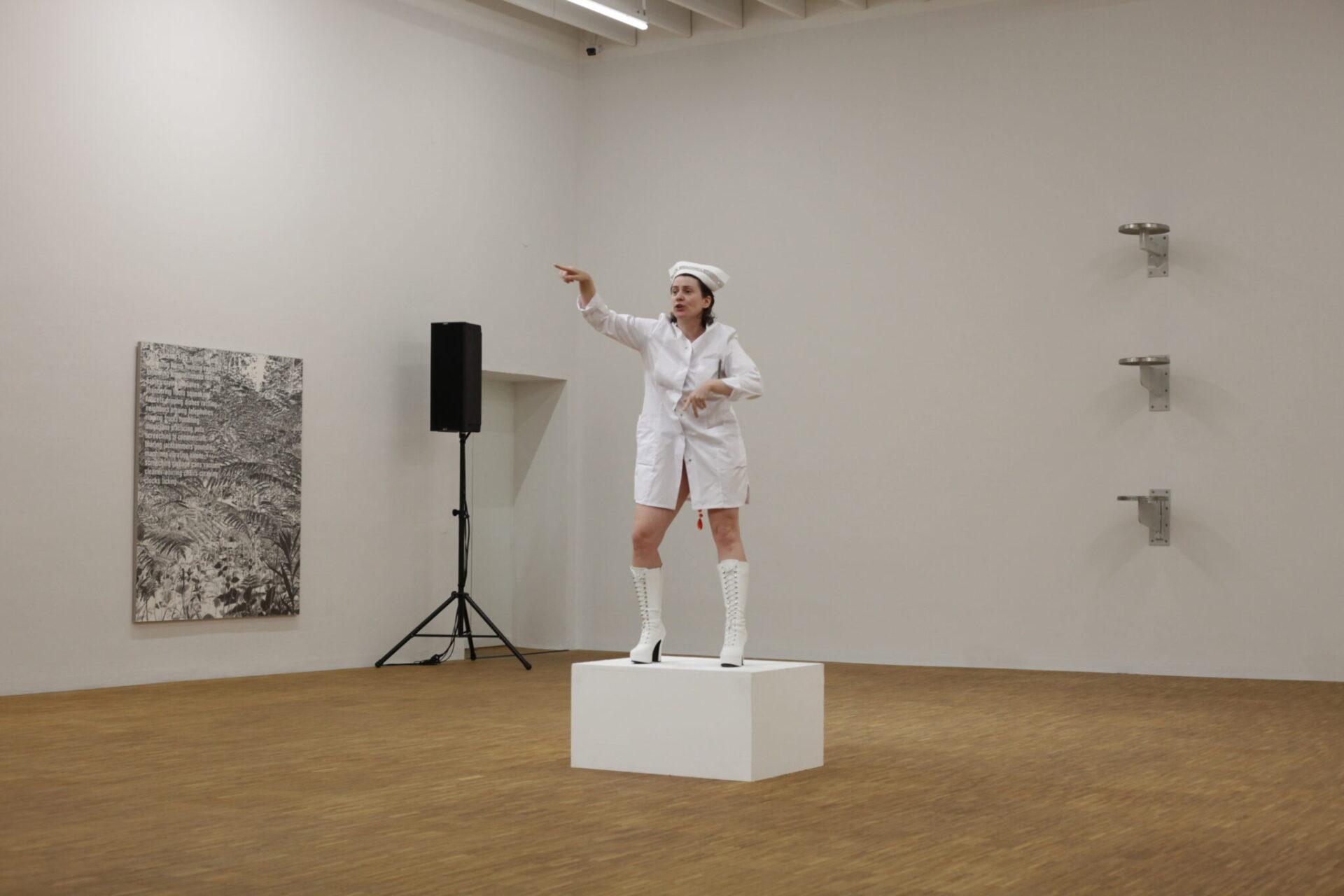
Performance is probably where it feels most physical this year. The PERFORM! programme at the Neue Nationalgalerie stages Trisha Brown’s Walking on the Wall from 1971 alongside a new commission by Kianí Del Valle—historic body-based work in dialogue with a younger generation reworking what performance can be.
BAW2026PM04Programm_EN.pdf
Fashion is showing up in more than one register, too. Platte.Berlin presents Hypogeum, a group show curated together with artist Thomias Radin, and fashion runs right through their whole week. At Featured Night, the label Haderlump presents its newest collection alongside photographic work by Sven Marquardt, while the week closes with an HTW Berlin × Jamie Lee O’Shea runway show staged inside an immersive set design.
At Konrad Fischer Galerie, Martin Margiela—who left his fashion house in 2009 to become a visual artist—brings his eye for everyday objects to Berlin, attracting different audiences.
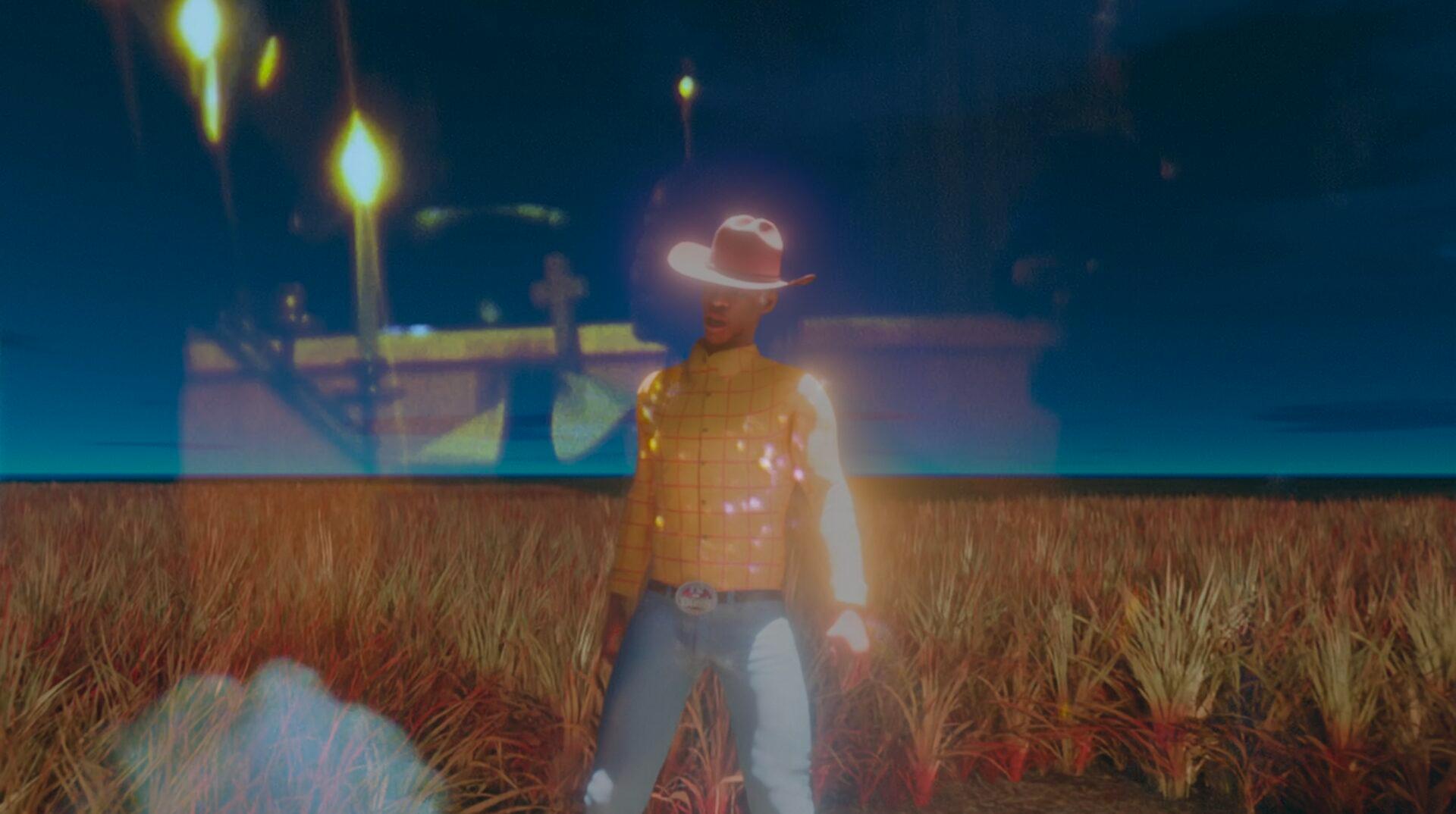
Technology and pop culture surface in less expected ways. Julia Wachtel’s paintings at Klemm’s trace a line from her Pictures Generation beginnings, appropriating pin-ups and pop icons, through to the disorienting scale of AI-generated imagery today.
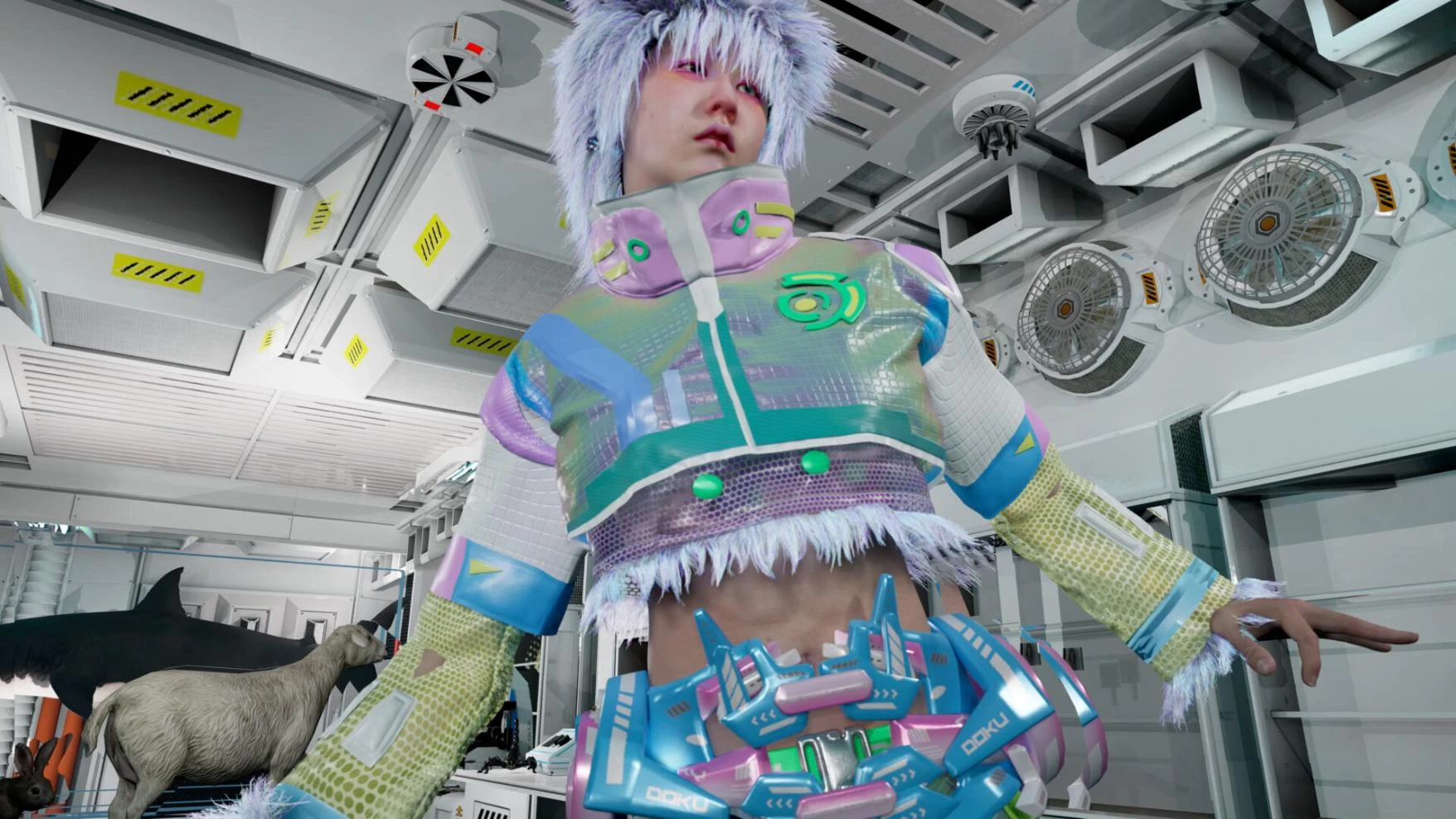
Lu Yang’s Doku: Triage, shown on decommissioned hospital beds in the former Kochhaus of the DRK Kliniken, borrows a very digital, almost gaming-derived visual language to talk about the body.
These are all artistic positions that refuse to stay inside one discipline, which is very much characteristic of Berlin and its art scene.
Sound is equally central to the 2026 programme, from the Ryuichi Sakamoto retrospective at Hamburger Bahnhof to The Ear is the Eye of the Soul at Reethaus, featuring contributions from Brian Eno, FKA twigs, Patti Smith and Kali Malone.

With AI and new technologies fundamentally changing how images are created, experienced and understood, what do you think artists can explore through these technologies that wasn’t possible before?
For most art history, an image pointed back to something real, a photograph to a moment, a portrait to a person. AI generation breaks that link: a picture can be entirely synthetic and still move you, or entirely real and still feel manufactured.
The artists I find most convincing are not illustrating that shift; they are working with it—which turns out to be a much bigger question than whether a machine can make art.
I am very much looking forward to David Claerbout’s Repose at Esther Schipper. His video works used technology long before AI, and I am curious to discover whether he’s made a shift toward AI too.
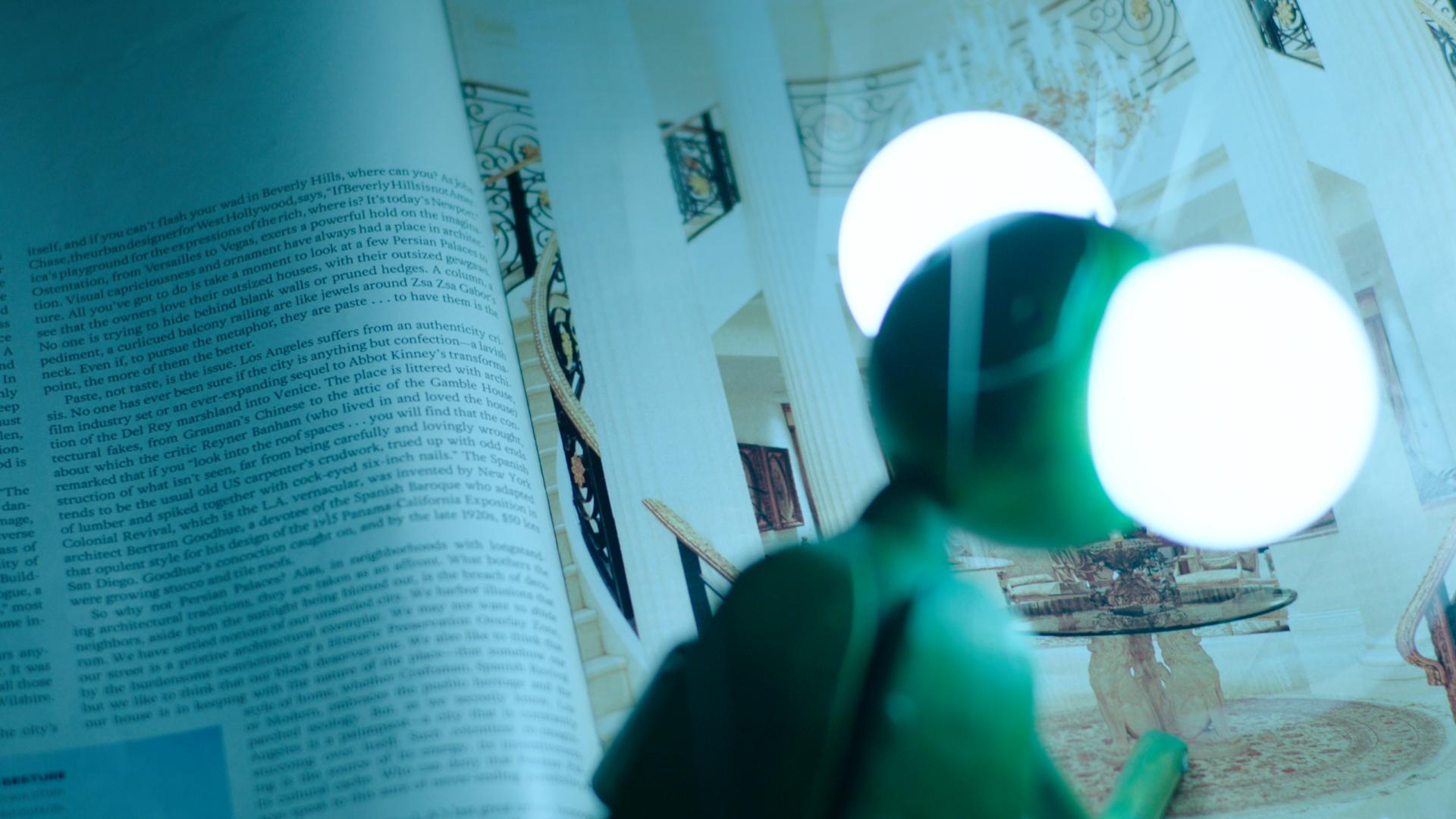
Another one on my list is Stephanie Comilang’s Search for Life, which unfolds as what she calls a “science-fiction documentary”, carried by multiple voices and asking how culture and society absorb mobility, capital and labour in a globalised world.
This is also why Berlin Art Week built a dedicated strand around new technologies at Berlin Art Week Garten, the festival’s nomadic centre, this year at Kulturforum.
I co-curated New Conditions: Art After AI together with Anika Meier, on 11 September at the Gemäldegalerie. It brings together artist talks, a lecture by Christoph Niemann on creativity and AI, and The Art World After AI, a panel examining what happens when technological power increasingly becomes political power.

Looking beyond this edition, what does the art world need to become more experimental, accessible and relevant to the next generation of artists and audiences?
If I’m honest, the biggest constraint on experimentation right now isn’t imagination, it’s conditions.
Berlin’s art scene has always drawn its energy from the fact that this is a city where artists can actually live and work, not just exhibit or have their works being sold. That status as a production site is under real pressure from the current cuts to cultural funding, and if it erodes, it risks becoming a myth we talk about rather than a fact we can point to.
So, before any format innovation, the art world needs to protect the material base that experimentation actually requires: affordable studios, project spaces, time.
Beyond that, I think relevance comes from dismantling the walls between disciplines—and between art and its usual settings—rather than reinforcing them.
Some of the works I’m most excited about this year only exist because an institution let go of its own format: a theatre ensemble staging inside a centuries-old painting collection; a video work watched from hospital beds inside a former clinic; a listening programme staged on a riverbank; art in a subway station, a former airport hangar, a hotel suite and a lecture-hall ruin inside a medical museum.
Those crossovers show how you reach audiences who were never going to walk into a white cube on their own terms.
And I’d add one more thing, especially after everything we’ve just discussed about AI. Relevance also depends on protecting real, embodied encounters as a counterweight to algorithmically mediated experience.
Formats like Discovering Collections!, where we open private collections that are normally invisible to the public, work precisely because they offer something no algorithm can simulate—an actual room, an actual conversation. We could all use a little more of that.
The 2026 programme indeed expands this idea through Open Houses and Discovering Collections!, giving registered visitors access to five private collections that have never previously been open to the public.
BAW2026PM04Programm_EN.pdf