- Date
- 02 OCTOBER 2023
- Author
- GLORIA MARIA CAPPELLETTI
- Image by
- SMART LIFE FESTIVAL
- Categories
- Interviews
Federico Faggin on the Interplay of Consciousness, AI, and Education
In the world of silicon chips and semiconductors, at the very foundation of modern computing, Federico Faggin stands as a pivotal figure. As one of the key minds behind the first microprocessor, his trajectory has shaped the digital age. Today, his focus has shifted toward a different frontier: the nature of human consciousness.
RED-EYE had the opportunity to engage with Faggin’s perspective at the intersection of consciousness, artificial intelligence, and education, a space where technological innovation meets deeper philosophical inquiry.
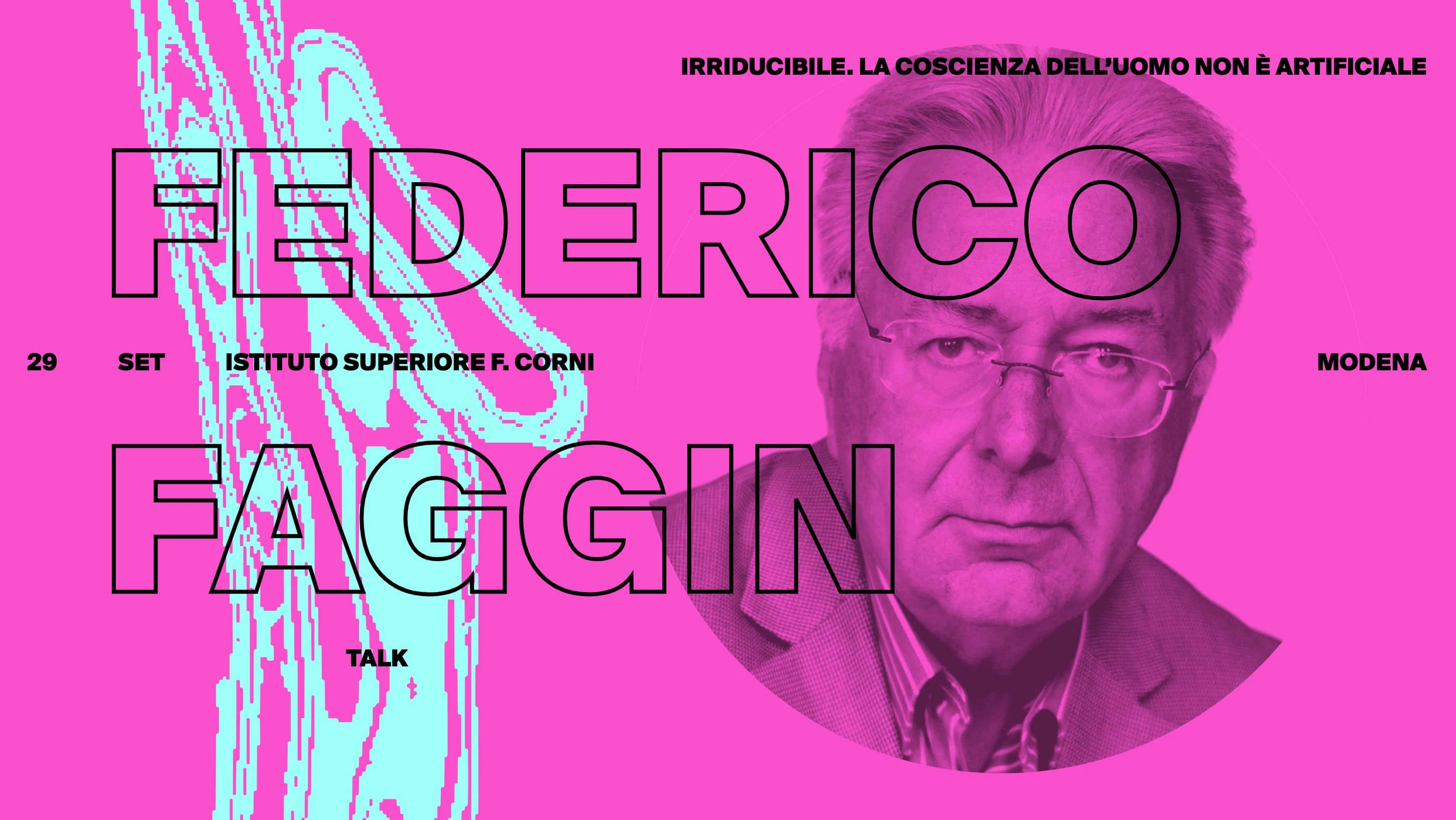
At Smart Life Festival 2023, hosted at Istituto di Istruzione Superiore Corni in Modena, Faggin entered into dialogue with students from local high schools. The conversation, moderated by Maria Raffaella Caprioglio, president of Umana, and Fabio Ferrari, founder of Ammagamma, opened a space for reflection on the evolving relationship between humans and machines.
For RED-EYE, the encounter offered a rare chance to revisit the origins of the digital revolution through the voice of one of its architects, while exploring the broader implications of a future increasingly shaped by AI.
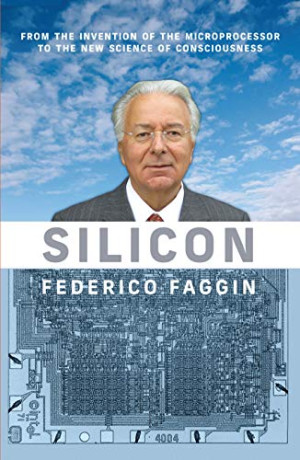
Faggin’s contribution to technology is foundational. He led the development of the Intel 4004, widely recognized as the first commercial microprocessor, a breakthrough that transformed computing and set the stage for decades of innovation. Beyond that, his work on MOS silicon gate technology enabled the creation of microprocessors, EPROM and dynamic RAM memory, and CCD sensors, technologies that underpin the digitization of information.
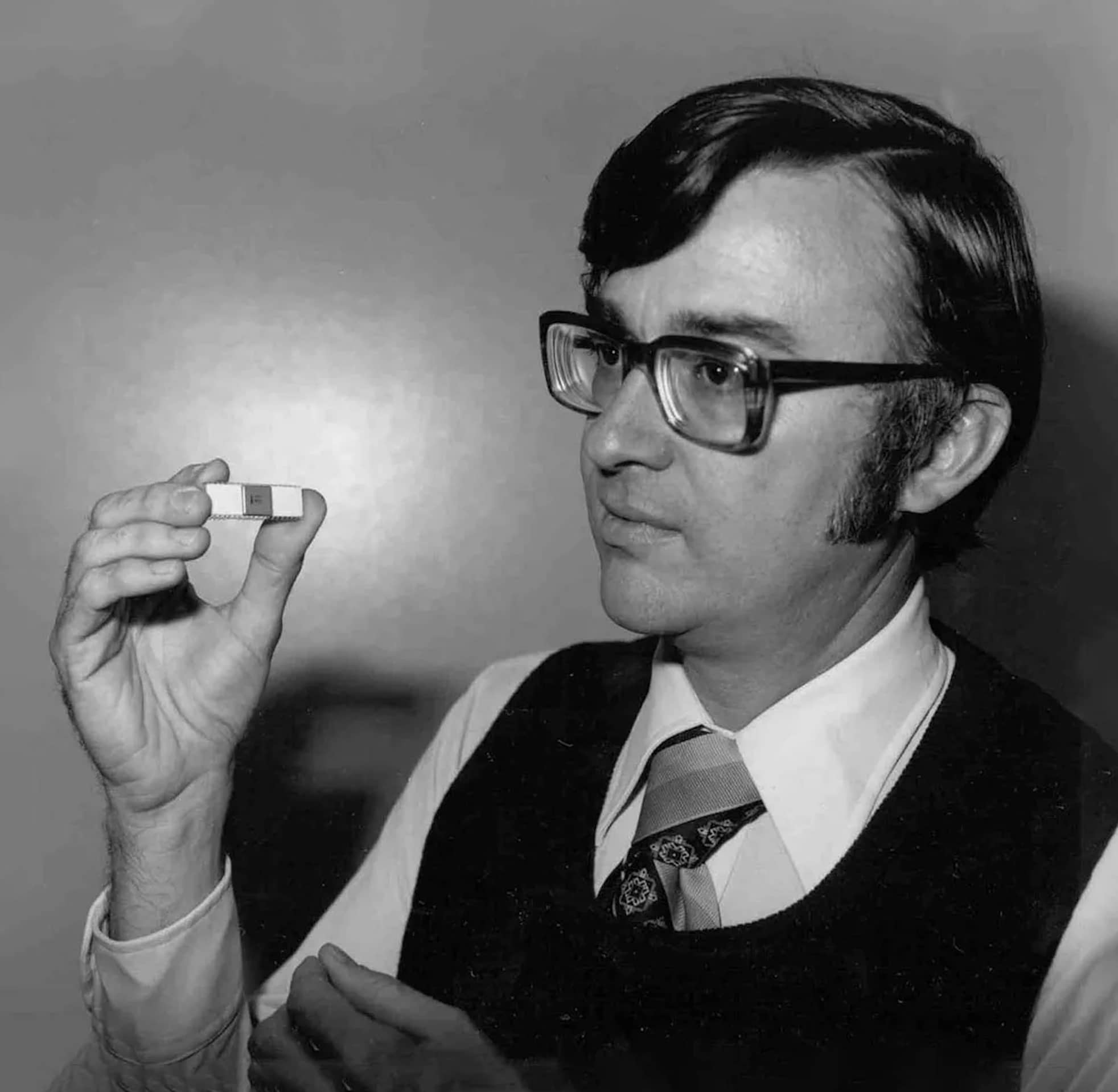
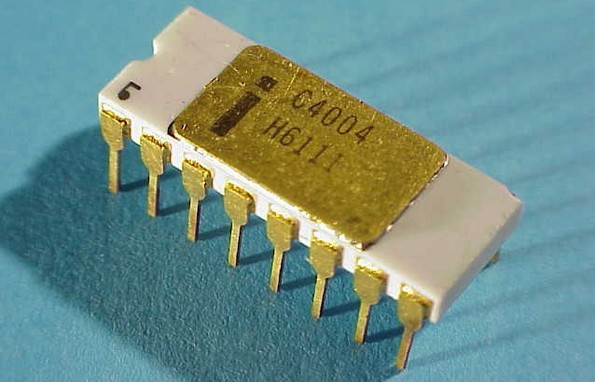
Faggin’s contribution to innovation extends far beyond the first microprocessor. After leaving Intel, he co-founded Zilog, where he developed the Z80, a processor that became one of the most influential and widely used in early computing, and remains in production today.
Later, with Synaptics, he helped introduce technologies that would redefine how we interact with machines, including the touchpad and early touchscreen interfaces, gestures that are now second nature.
His work has been widely recognized. In 2010, he received the National Medal of Technology and Innovation from President Obama, one of the highest honors in the field. In 2019, he was awarded the title of Knight Grand Cross of the Order of Merit of the Italian Republic by President Mattarella.
In recent years, Faggin’s focus has shifted toward a different kind of exploration. In 2011, he founded the Federico and Elvia Faggin Foundation, a non-profit organization dedicated to the scientific study of consciousness. Through the foundation, he supports research programs across universities and institutions in the United States and Italy, contributing to a growing body of work that seeks to better understand the nature of awareness.

In Federico Faggin’s work, technology is only one part of the story. Alongside his contributions to computing, there is an ongoing reflection on consciousness, life, and what it means to be human. His thinking moves beyond systems and devices, opening a space where science and philosophy begin to intersect.
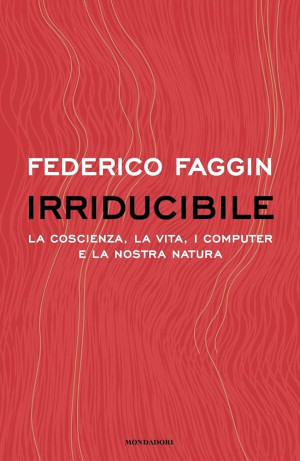
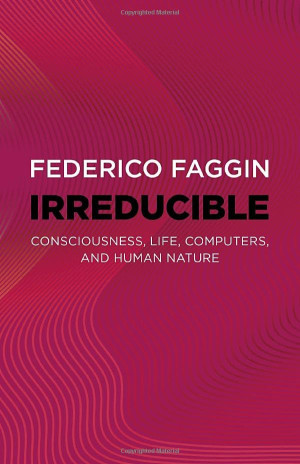
For those interested in the future of artificial intelligence and its broader implications, his book Irreducible: Consciousness, Life, Computers, and Human Nature offers a deeper entry point into this perspective. The English edition will be released in June 2024. and you can find it here.
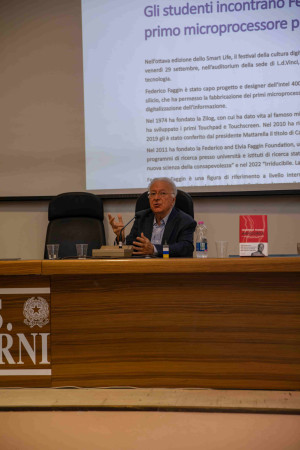
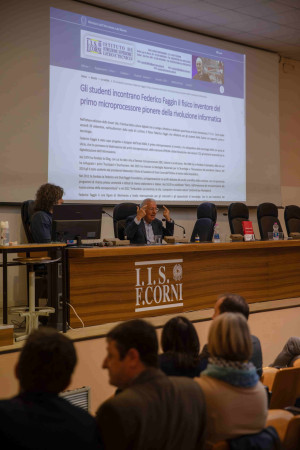
It was a privilege to speak with Federico Faggin, in a conversation that moved across artificial intelligence, the role of meditation, and the open questions surrounding consciousness. His reflections offered a nuanced perspective on the relationship between human intelligence and technology, while also touching on emerging areas such as quantum computing, outlining both the challenges and the possibilities ahead.
RED-EYE asked Federico Faggin whether his research into consciousness, and its implications for understanding human existence, had also led him to reflect on education. Could practices such as meditation one day become as fundamental as reading or mathematics within school curricula?
Faggin’s response was immediate and affirmative: “It’s absolutely a good idea.”
For him, the integration of mental, emotional, and even spiritual awareness may become essential in navigating a world increasingly shaped by artificial intelligence. Understanding AI, he suggests, cannot remain purely intellectual, it must also involve intuition. That “gut feeling,” he explains, is something uniquely human, and it is precisely this capacity that should be cultivated from an early age. “When you know something from your guts,” he emphasizes, “that is specifically human.”
He extends this reflection into the realm of ethics, drawing a connection between intuition, courage, and moral responsibility. The ability to make decisions grounded in a deeper sense of awareness, rather than pure calculation, has long been central to human thought. Philosophers such as Socrates, across centuries, have demonstrated the value of introspection, critical thinking, and the courage to act according to one’s convictions. These qualities remain essential reference points as we confront increasingly complex technological realities.
From here, the conversation naturally shifts toward artificial intelligence itself. If AI is set to become a central tool in human life, how should we approach it?
According to Faggin, it is not an overstatement to suggest that our future may depend on our ability to understand and guide AI. Humans will need not only to use it, but to understand it deeply. At the same time, he is clear about its fundamental limitations. AI operates within deterministic systems: it processes information, but it does not experience, feel, or intuit.
When asked whether systems like ChatGPT or Midjourney could generate different responses based on a user’s intentions or emotional state, his answer is unequivocal: no.
In Faggin’s view, AI lacks empathy. It functions through algorithms and data, without access to subjective experience or awareness. Even in discussions around emerging technologies such as quantum computing, he draws a crucial distinction: a system might exhibit a form of consciousness, coscienza, but not self-awareness, auto-coscienza. Without self-awareness, there is no free will, libero arbitrio. And without free will, consciousness itself loses its meaning as an active, operational force. As he puts it, “senza libero arbitrio, la coscienza non ha senso d’esistere perché non è operazionale.”
Faggin’s reflections ultimately point toward the need for a more integrated approach to the future. As AI becomes increasingly embedded in our daily lives, the challenge is not only technological, but human. Education, in this sense, cannot focus solely on knowledge and technical skills, it must also cultivate awareness, intuition, and emotional intelligence.
Rather than positioning technology and humanity in opposition, his perspective suggests a more nuanced path forward: one in which technological advancement is accompanied by a deeper investment in what makes us human. Only through this balance, he implies, can we navigate the complexities ahead and ensure that innovation remains aligned with human values.
Text by Gloria Maria Cappelletti, editor in chief, RED-EYE
Further Information Faggin Foundation https://www.fagginfoundation.org/
Link to the Virtual Editorial Experience
All images by Smart Life Festival, RED-EYE metazine and Archive