- Date
- 29 AUGUST 2026
- Author
- DANIEL FACE
- Image by
- @DANK.XUPR
- Categories
- Interviews
Dan Cooper on AI Art, Identity and the Power of Perception
Dan Cooper (@dank.xupr) is an artist and creative director working across photography, design and AI, using surreal imagery to explore identity, perception and the space between recognition and distortion. His work asks what happens when something looks familiar, but the meaning beneath the surface begins to shift.
With a background in photography and design, Cooper approaches AI art through the same principles that shaped his practice: composition, light, direction and intention. Rather than allowing AI to operate on autopilot, he sees the technology as an extension of his creative eye, giving him the ability to build characters and worlds beyond the physical limitations of a camera.
For Cooper, however, impressive technology is not enough. Meaning comes from having a point of view, creating tension and resisting the temptation to make images purely decorative. As co-founder of FRMWRK.AI, he is also helping create a community focused on craft, critique and treating AI as a medium rather than a shortcut.
In this interview, Dan Cooper discusses AI art, photography, identity, creative control, beauty, unexpected results and why the way we look at others may reveal more about ourselves than we realise.
Read the full interview below.
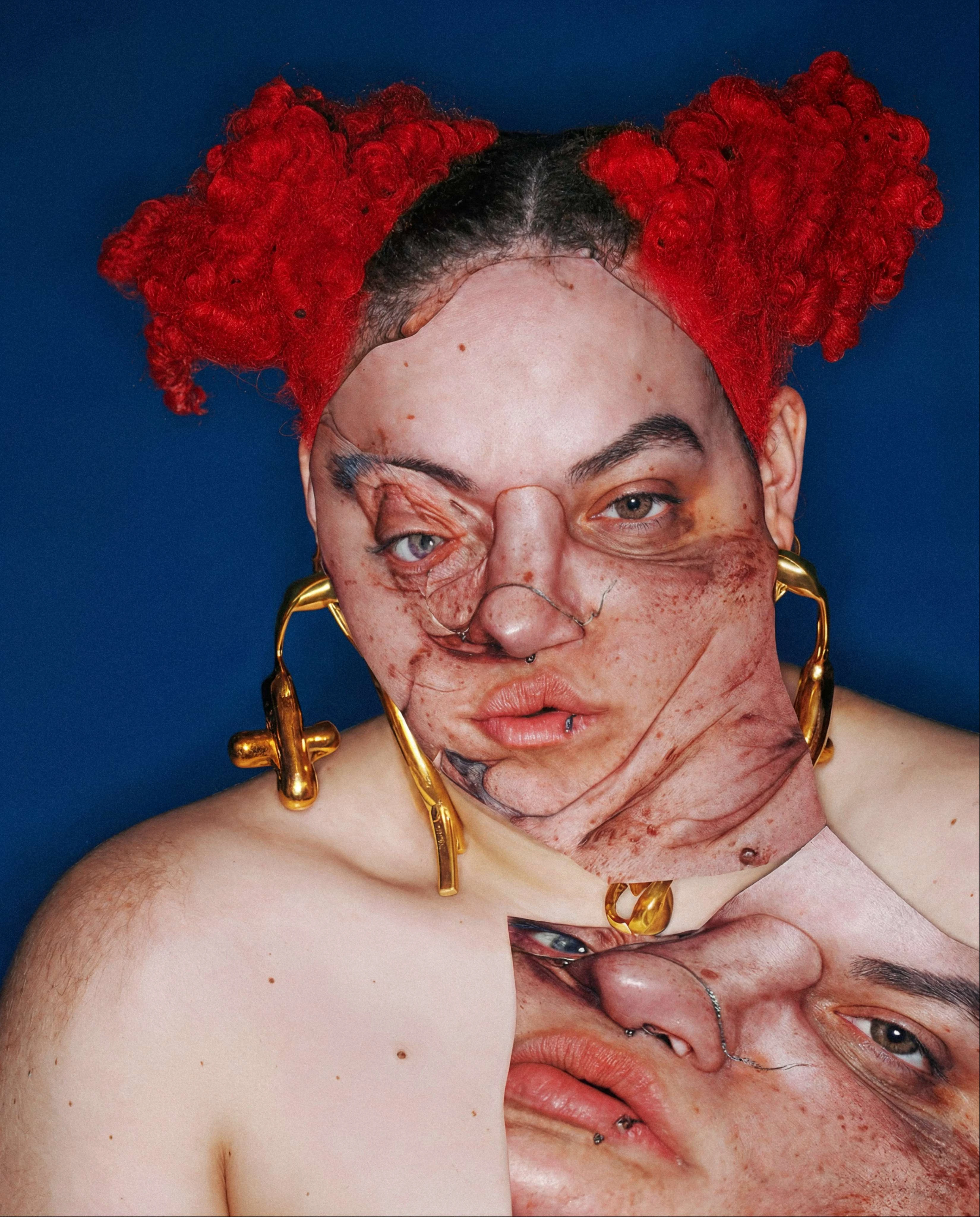
Your work often transforms familiar subjects into something slightly surreal or unsettling. What draws you to that space between recognition and distortion?**
I've always been drawn to the moment where something feels familiar but not quite settled — where you recognise a face, a texture, a gesture, but something underneath it has shifted. That space is honest to me. It mirrors how identity and perception actually work; nothing is ever fixed, and people are constantly being read and misread. Distortion, for me, isn't about breaking something beautiful, it's about showing the layers that are usually hidden underneath a "clean" image.
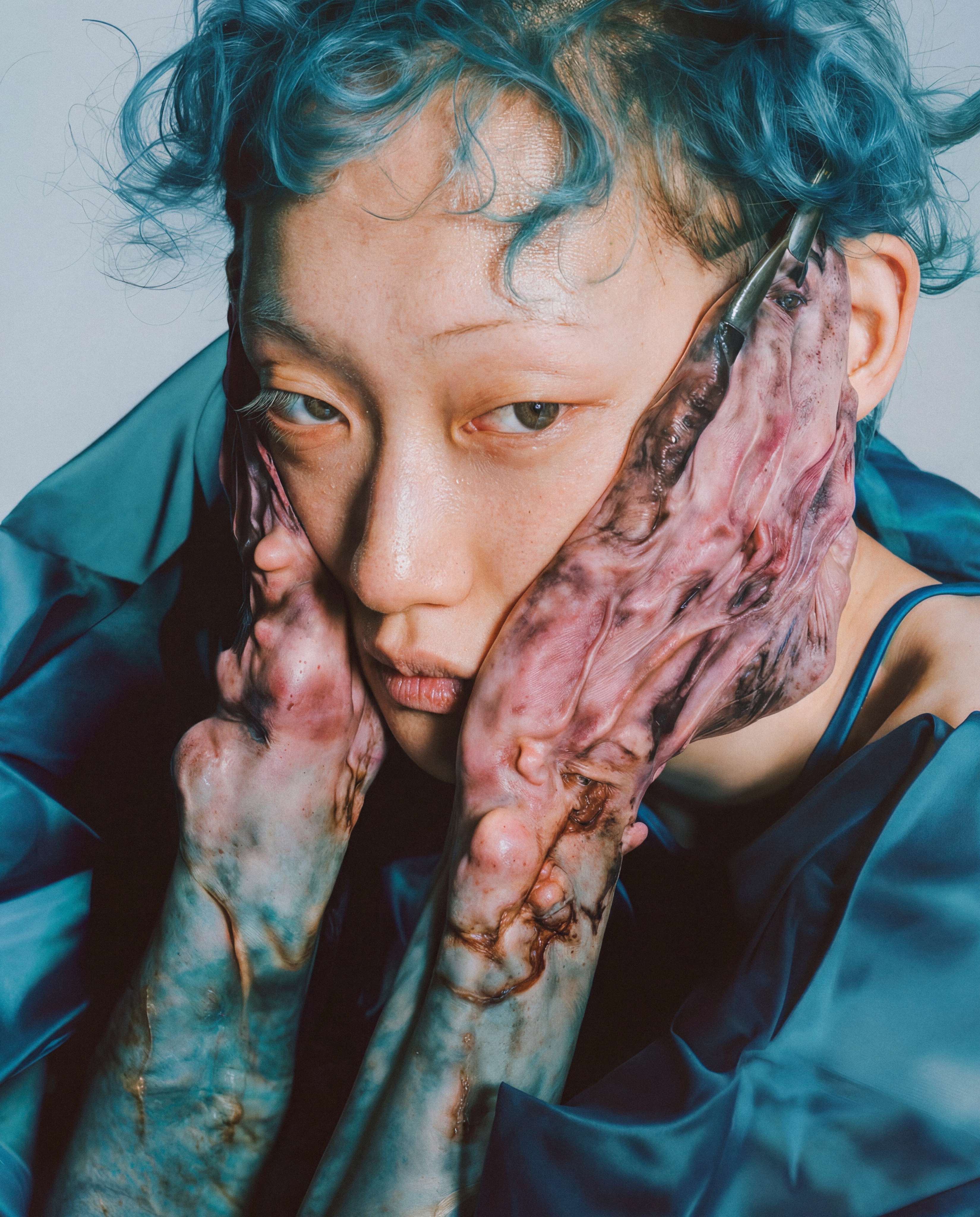
You come from photography and design, but AI has become such a central part of your practice. What has AI unlocked creatively that you couldn't access before?**
Photography taught me to see, composition, light, the decisive moment. AI has given me a way to direct those instincts without the physical limits of a camera, a location. I can build worlds and characters that don't exist anywhere except in my head, and refine them with the same patience I'd bring to a photoshoot. It hasn't replaced my eye, it's extended it. I'm still working as a director and collaborator, not letting a tool run on autopilot.
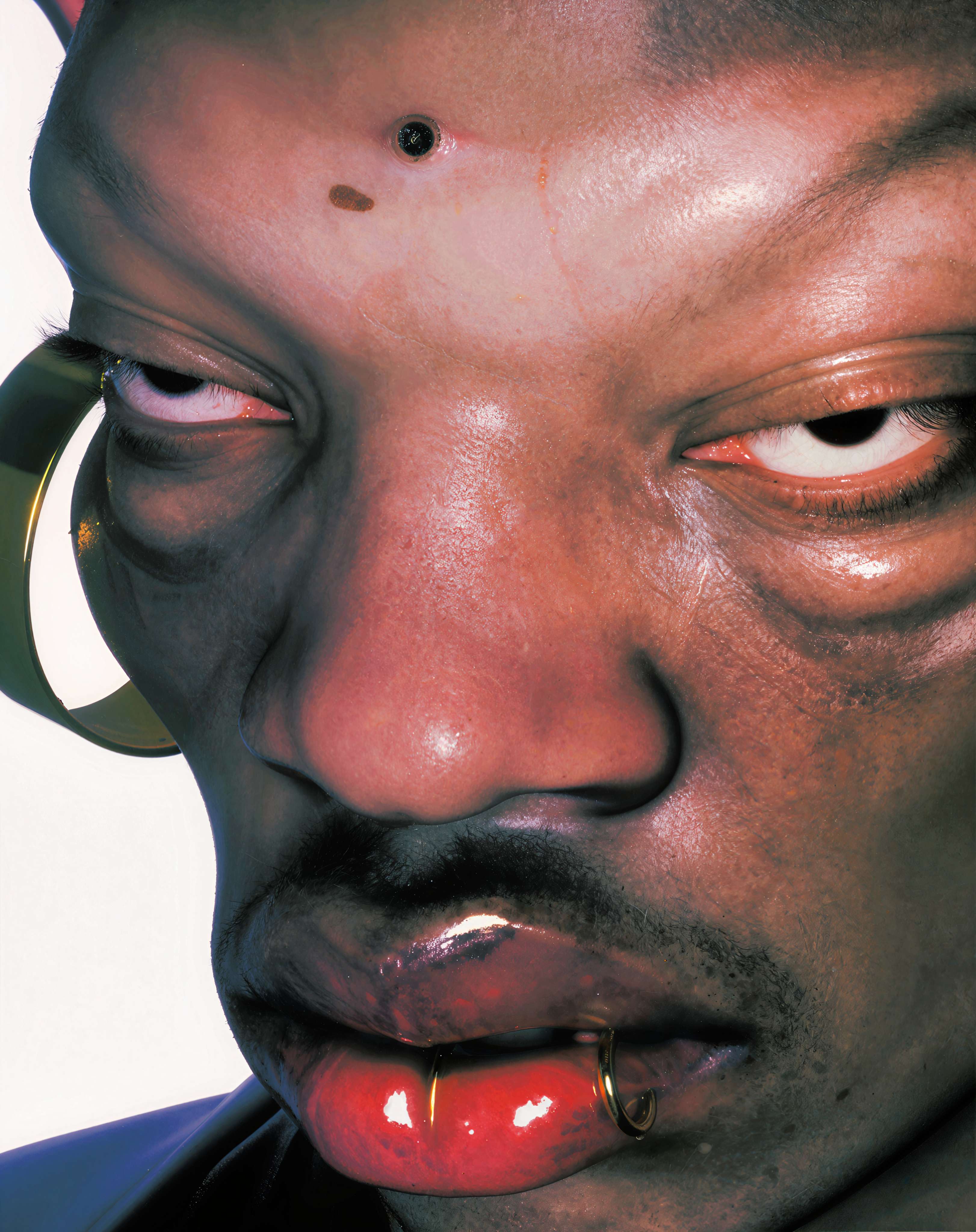
There is so much technically impressive AI imagery being produced today. What makes an image feel genuinely emotional or meaningful to you, beyond simply looking beautiful?**
Technical polish is the key now, anyone can generate something impressive in seconds. What I care about is intention. Does the image carry a point of view? Is there tension, a story, a question being asked? An emotional image usually has some kind of imperfection or friction in it, something that resists being purely decorative. Beauty without that friction just becomes tame.
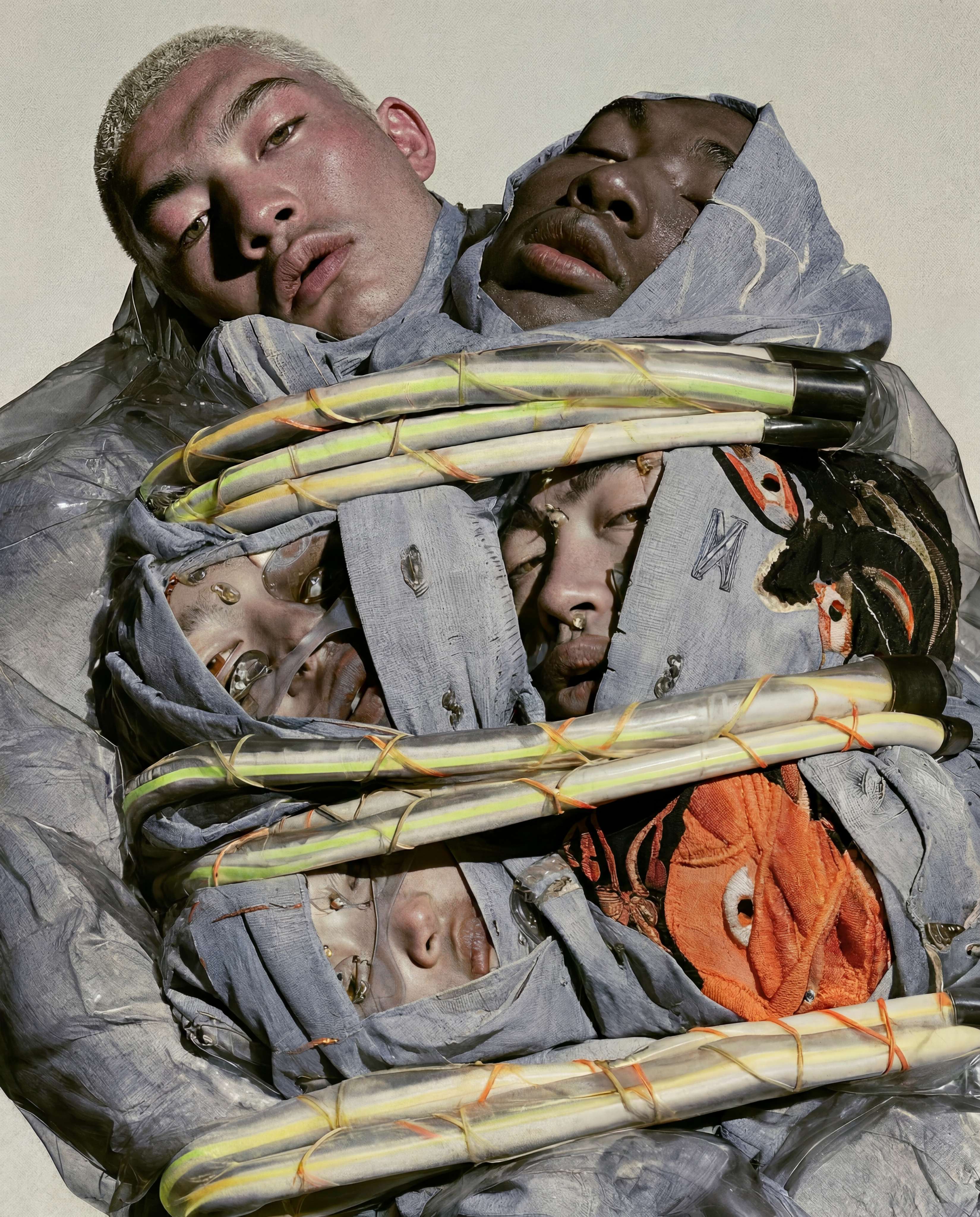
How much control do you want to have over the final image? Do you see the unexpected results of AI as mistakes to correct, or as part of the creative process?**
I want a lot of control over intention, the concept, the character, the emotional register, but I stay open to what the tool gives me that I didn't ask for. Some of my favourite results have come from the model misunderstanding a prompt in a way that was more interesting than what I planned. I treat those moments the way a photographer treats a happy accident in the darkroom: not a mistake, just another collaborator in the room.
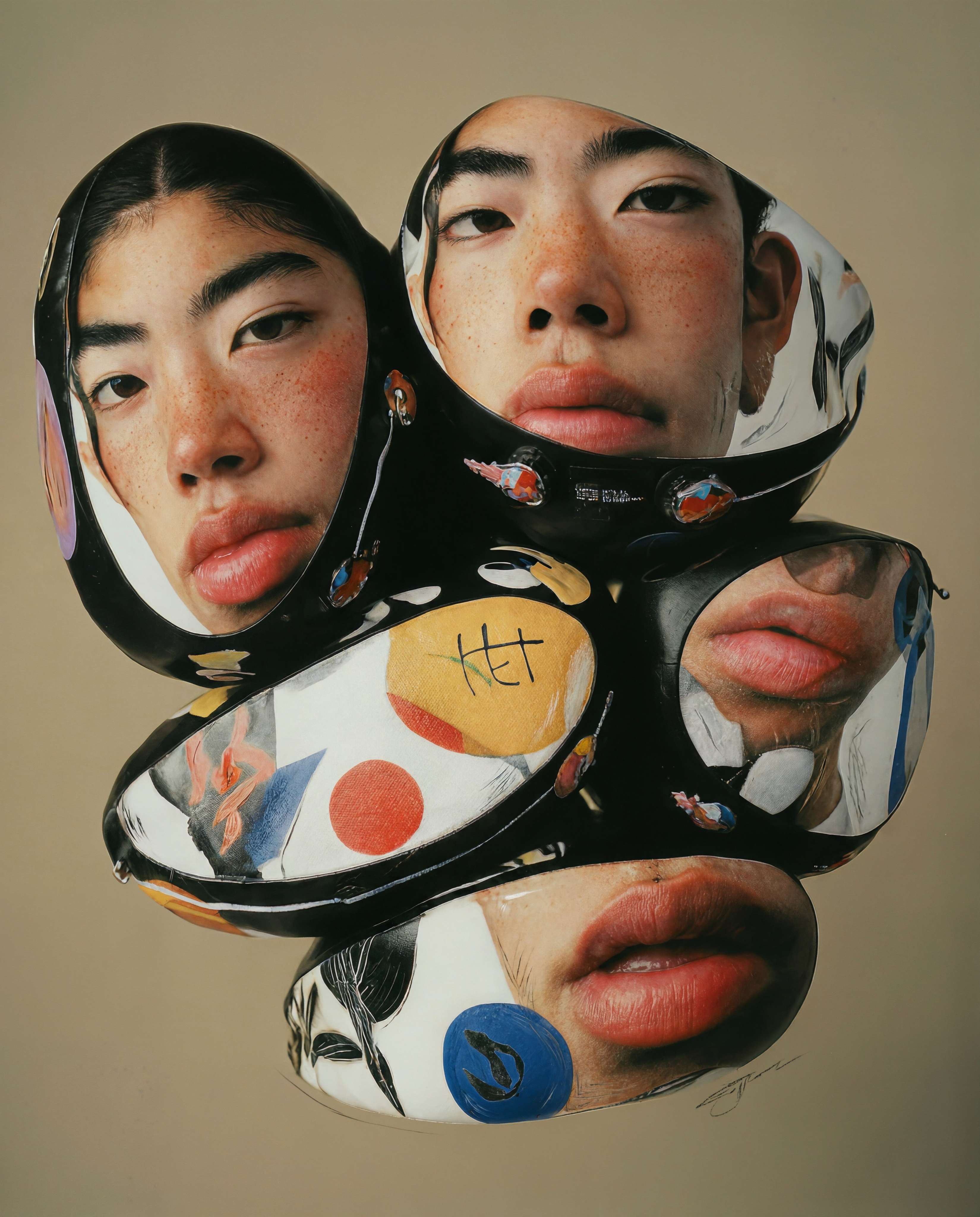
You co-founded FRMWRK.AI. What did you feel was missing from the creative industry that made you want to build a space specifically for artists working with AI?
A lot of AI art spaces are built around volume and speed, churn out content, chase engagement. What felt missing was a space that valued craft and process the way any serious creative discipline does: critique, intentionality, taste. FRMWRK.AI exists for artists who treat AI as a medium to master, not a shortcut. It's less about how much you can produce and more about what you're actually trying to say. It was also a great way to add a sense that of community to an already publicly hostile environment.
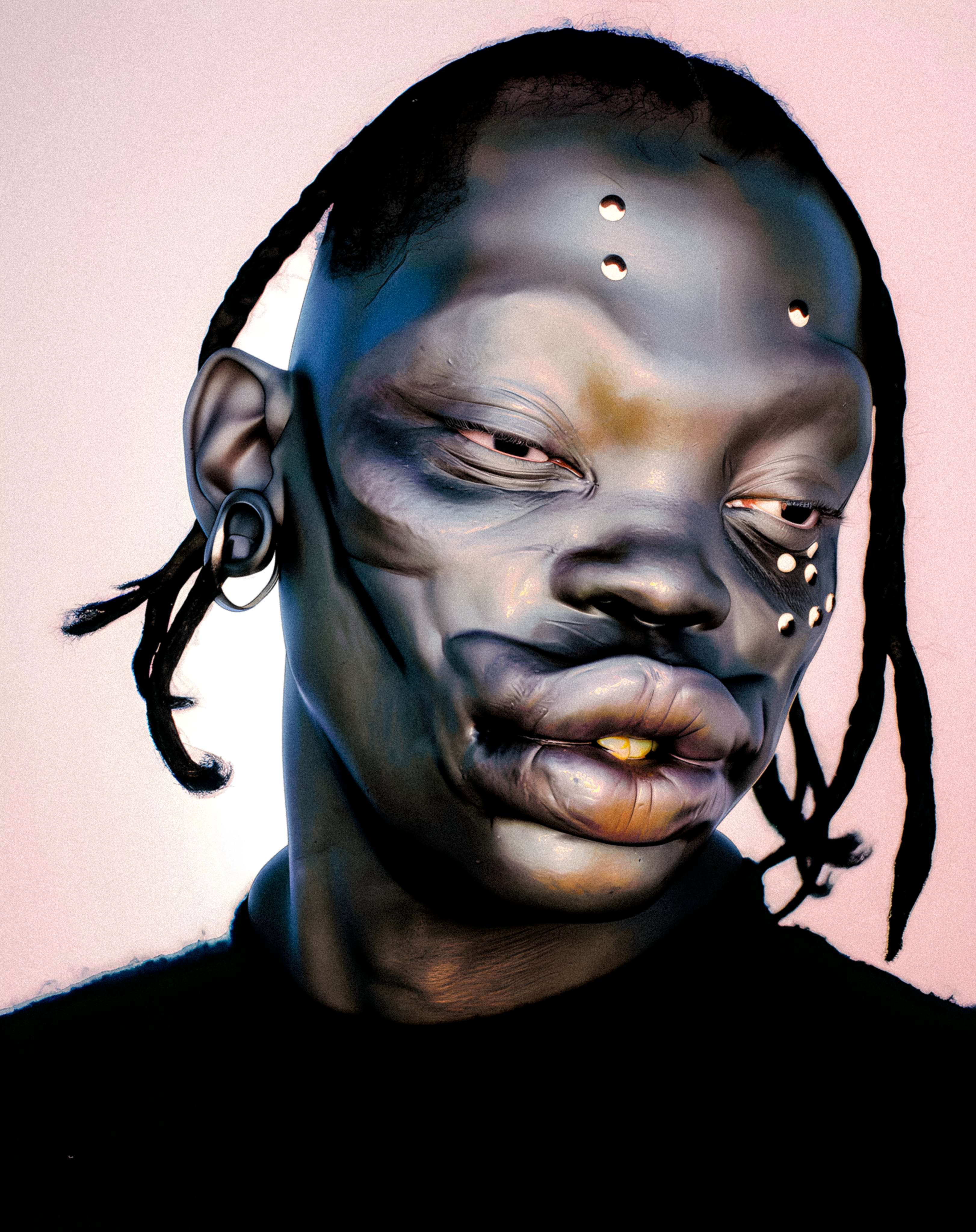
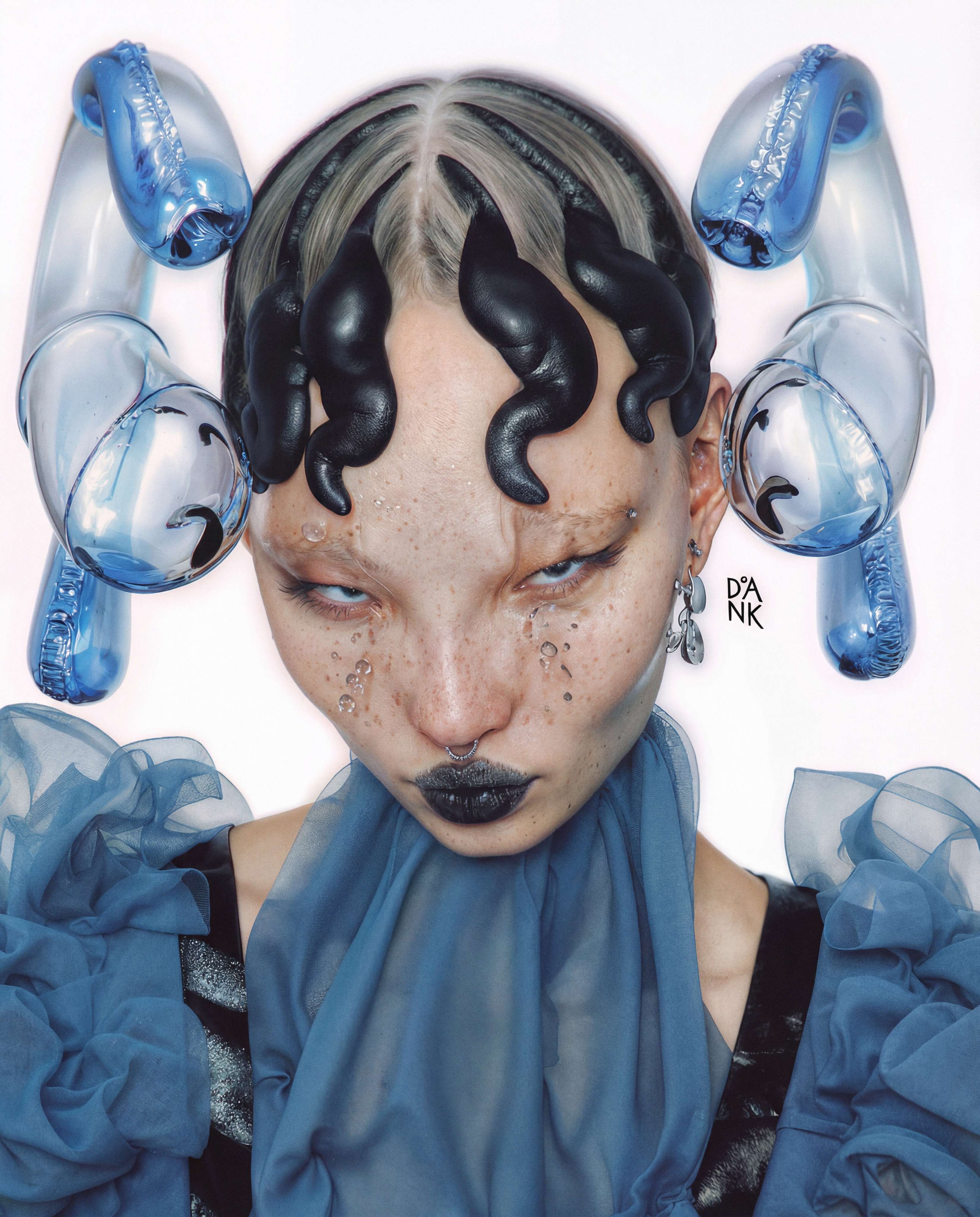
If we take away AI, photography, fashion, and all the labels surrounding your work, what do you think you are ultimately trying to say through your images?**
I think I’m interested in the gap between what a surface offers and what people decide to read into it. We treat faces, skin, features, styling as evidence, as if they’re legible, as if a glance is enough to know something true about a person. It rarely is. Most of what gets read off a surface is projection: the observer filling in a story and mistaking it for perception. That’s the part worth examining, not the surface itself, but the confidence people attach to reading it. So my images are built to sit in that same instability on purpose, a face that resembles something, a marking that implies a history, an origin that’s slightly wrong or unresolved, because that’s closer to how identity actually behaves than any single clean image could be. If there’s a thesis underneath the work, it’s that certainty about another person, formed at a glance, tells you more about the person doing the looking than the one being looked at.